
How Centralized Infrastructure Monitoring Improves IT Operations
Introduction
Modern businesses rely on servers, networks, applications, cloud resources, storage, and security systems to keep daily operations running. As IT environments become more complex, monitoring each component separately can create visibility gaps and delay issue detection. Centralized infrastructure monitoring brings critical systems into a unified monitoring environment, helping IT teams identify issues, understand infrastructure health, and respond faster. TI Infotech provides IT infrastructure and technology services designed to support businesses with their evolving IT requirements.
What Is Centralized Infrastructure Monitoring?
Centralized infrastructure monitoring is an approach where multiple IT infrastructure components are monitored through a common platform or dashboard. Instead of checking servers, networks, applications, and other systems individually, IT teams can access important performance and availability information from a centralized view.
This approach helps organizations gain better visibility into infrastructure health and identify relationships between different events. For example, a network performance issue may affect server response times. Centralized monitoring can help IT teams investigate such issues with greater context.
Why Do IT Teams Need Centralized Monitoring?
Modern IT environments can include physical servers, virtual machines, network devices, applications, storage systems, cloud resources, and security infrastructure. Monitoring these components independently can increase operational complexity and make it difficult to identify problems quickly.
Centralized infrastructure monitoring provides a consistent approach to observing critical systems and helps IT teams manage growing infrastructure more efficiently.
How Centralized Monitoring Improves IT Operations
Provides a Single View of IT Infrastructure
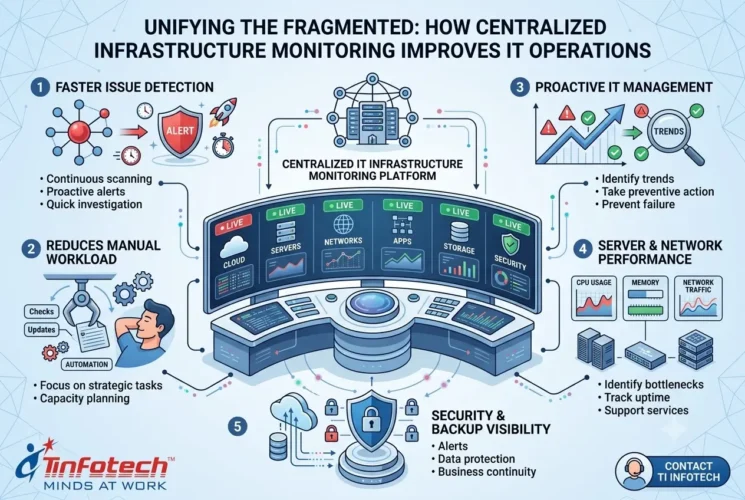
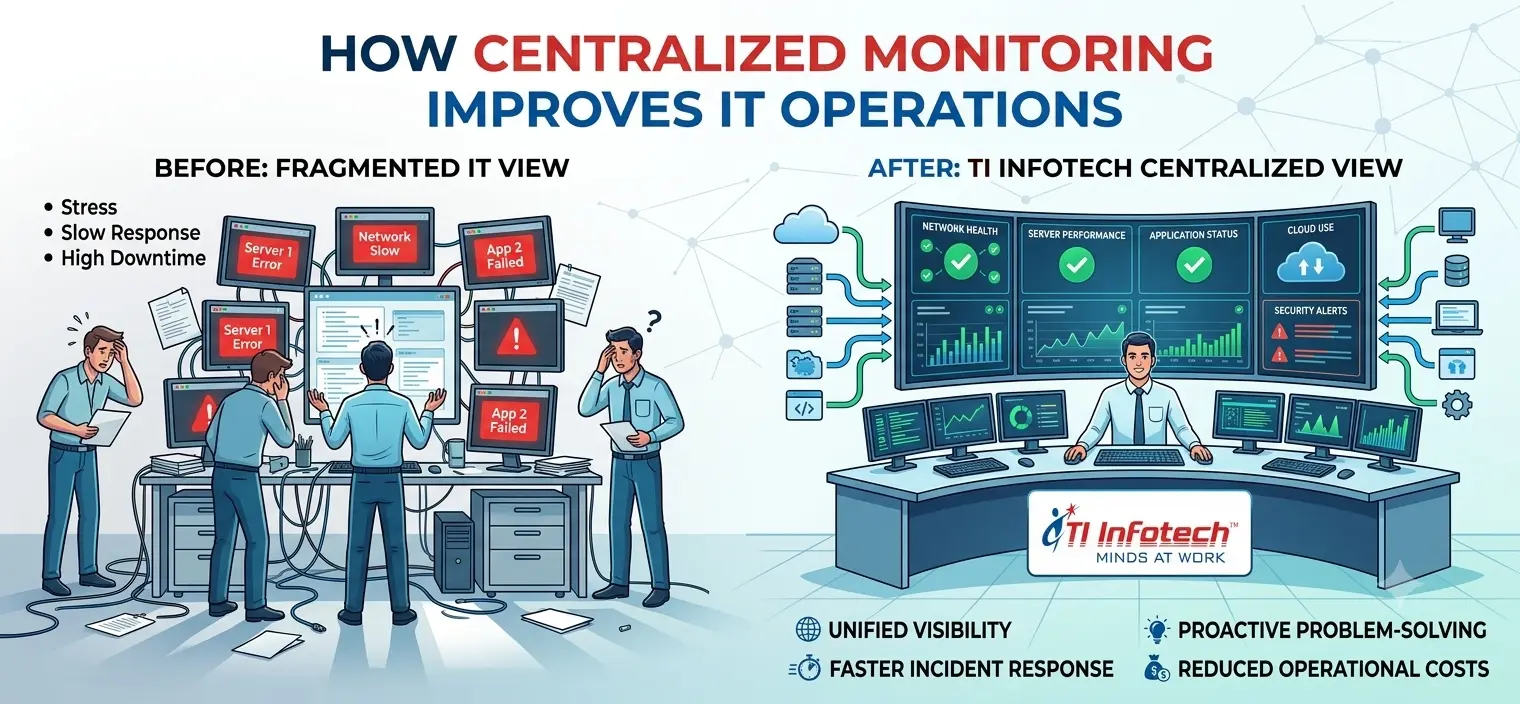
A centralized dashboard provides visibility into important infrastructure components from one location. Teams can monitor server availability, network performance, resource utilization, and alerts without constantly switching between different monitoring interfaces.
Enables Faster Issue Detection
Continuous infrastructure monitoring can identify unusual performance, system failures, and availability problems as they occur. Timely alerts allow IT teams to investigate incidents earlier and take corrective action before they create wider operational disruption.
Reduces Manual Monitoring
Automated monitoring reduces the need for repetitive infrastructure checks. This allows IT professionals to focus more on optimization, security, capacity planning, and strategic technology initiatives.
Improve Server and Network Performance
Monitoring CPU usage, memory, storage, uptime, network traffic, and application availability helps identify bottlenecks and recurring performance problems. Effective server management services can further support server performance monitoring, security, backup, and maintenance.
Supports Proactive IT Management
Centralized monitoring enables teams to identify performance trends and recurring issues. Instead of waiting for a system to fail, IT teams can take preventive action based on monitoring data and alerts.
Strengthens Security and Backup Visibility
Centralized monitoring can also improve visibility across security events and backup operations. Monitoring infrastructure alerts, security activities, and backup status helps teams identify potential issues that could affect data protection and business continuity.
Centralized Monitoring and Data Centre Management
Data center management involves multiple areas, including network management, server management, security management, backup management, and disaster recovery. A centralized monitoring approach connects these operational areas through a common view. TI Infotech’s Data Centre Management Services include monitoring and management of servers, data, applications, network infrastructure, security, and backup environments.
Best Practices for Implementation
Businesses should begin by identifying critical infrastructure components and defining meaningful monitoring parameters. Monitoring should cover availability, performance, capacity, security, events, and backup status where relevant.
Organizations should also configure alerts according to business impact to avoid unnecessary notification overload. Monitoring rules need regular review as infrastructure changes, while integration with incident management and escalation processes can further improve operational efficiency.
FAQ
What is centralized infrastructure monitoring?
Centralized infrastructure monitoring is a method of monitoring multiple IT infrastructure components through a unified platform or centralized view.
What can businesses monitor centrally?
Businesses can monitor servers, networks, applications, storage, virtual environments, cloud resources, backups, and security-related events, depending on their monitoring solution.
How does centralized monitoring reduce downtime?
It provides continuous visibility and timely alerts, helping IT teams identify infrastructure problems earlier and respond before they cause significant service disruption.
Is centralized monitoring useful for cloud environments?
Yes. Centralized monitoring can help organizations maintain visibility across on-premises, virtual, and cloud infrastructure when the monitoring solution supports those environments.
Conclusion
Centralized infrastructure monitoring helps businesses move from fragmented IT visibility toward a more proactive approach to infrastructure management. By bringing server, network, security, applications, and backup monitoring into a unified environment, organizations can improve issue detection, reduce manual effort, support performance management, and strengthen business continuity.
For organizations looking to discuss their IT infrastructure requirements, Contact TI Infotech.