
AI in Travel: How AI-Powered Itinerary Planning Is Changing the Way People Travel
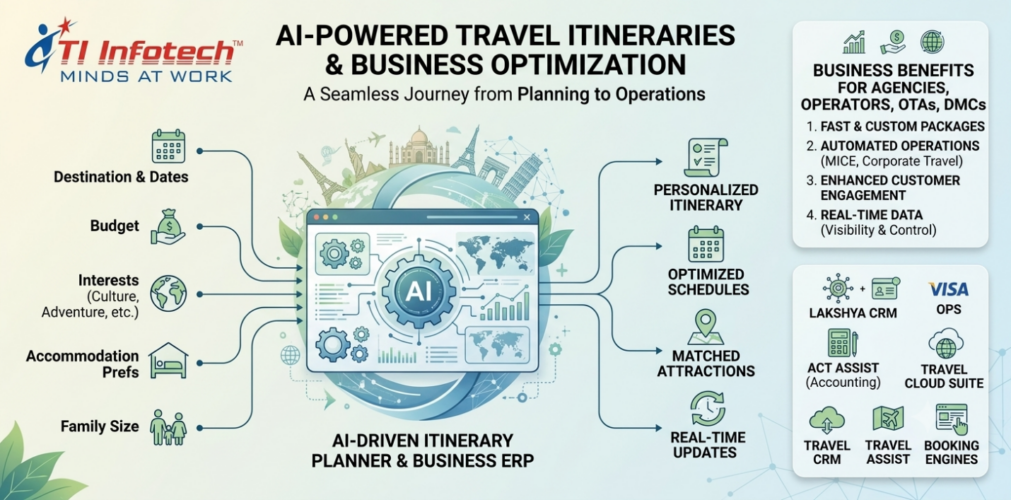
Planning a trip can take hours. Travelers need to compare flights, hotels, activities, restaurants, transportation, and sightseeing options before creating an itinerary. Artificial intelligence (AI) is changing this process by making travel planning faster, more personalized, and easier.
With AI-powered itinerary planning, travelers can share their destination, budget, interests, travel dates, and preferences and receive customized recommendations. Instead of building a trip from scratch, they can start with an itinerary designed around their needs and make changes as required. Explore TI Infotech’s travel technology solutions to find the right tools for your travel business.
For travel agencies, tour operators, destination management companies (DMCs), OTAs, and TMCs, AI can also automate manual tasks, create personalized packages, and improve customer experience.
What Is AI-Powered Itinerary Planning?
AI-powered itinerary planning uses artificial intelligence to create and organize travel plans based on a traveler’s requirements.
Travelers can provide information such as:
- Destination and travel dates
- Budget and number of travelers
- Interests and preferred activities
- Accommodation preferences
- Transportation needs
- Preferred travel style
AI can use this information to recommend hotels, attractions, activities, transportation, and daily schedules.
For example, a family visiting Dubai for five days may want family-friendly activities, comfortable accommodation, sightseeing, and shopping. An AI travel planner can use these preferences to create a suitable itinerary.
How Does AI Create Personalized Itineraries?
AI combines traveler preferences with travel data to provide relevant recommendations.
Understanding preferences: AI can consider budget, destination, dates, group size, interests, and travel style. A solo adventure traveler will have different requirements from a family traveling with children.
Recommending experiences: AI can match travelers with activities based on their interests. History lovers may receive museum and heritage recommendations, while food enthusiasts may receive restaurant and culinary experiences.
Organizing schedules: AI can arrange activities based on location, available time, distance, and schedules. This can reduce unnecessary travel and help travelers use their time better.
Managing budgets: AI can consider the traveler’s budget when recommending hotels, transportation, activities, and other services.
How AI Is Changing Travel Planning
AI is making travel planning less manual and more personalized.
Faster Trip Planning
Instead of spending hours researching different websites, travelers can generate an initial itinerary quickly and refine it according to their preferences.
Personalized Recommendations
AI can consider individual needs rather than providing the same recommendations to every traveler.
Easier Travel Discovery
Popular destinations can have hundreds of attractions and activities. AI helps narrow these options based on interests, budget, and available time.
Better Use of Time
AI can organize activities into practical daily schedules, which is especially useful for short trips.
Easier Itinerary Changes
Weather, delays, availability, and personal preferences can change travel plans. AI-powered systems can suggest alternatives and adjust itineraries when reliable current data is available.
From Static Itineraries to Dynamic Travel Plans
A major opportunity for AI in travel is moving from static itineraries to dynamic travel plans.
Traditional travel often follows:
Plan → Book → Follow
An AI-enabled journey can move toward:
Plan → Book → Monitor → Adjust → Continue
For example, if bad weather affects outdoor activity, an intelligent system could suggest a nearby indoor attraction and reorganize the day’s schedule.
This makes AI-powered itinerary planning more than an itinerary generator. It can become an ongoing travel assistant. However, these capabilities depend on accurate and current information about travel services, availability, schedules, and local conditions.
How AI Benefits Travel Businesses
AI is also helping travel companies improve operations and customer service.
Faster itinerary creation: Travel consultants and tour operators can use AI to create an initial itinerary from customer requirements and then add their professional expertise.
Personalized tour packages: Tour operators and DMCs can create packages for families, luxury travelers, adventure seekers, or budget travelers.
Better customer engagement: AI can help businesses provide recommendations that match customer interests, creating more relevant communication.
More cross-selling: A personalized itinerary may include flights, hotels, car rentals, excursions, and sightseeing. AI can identify relevant services while travel technology supports booking.
From AI Itinerary Planning to Travel Booking
An itinerary is only one part of the travel journey. After deciding what they want, travelers need to book flights, hotels, transportation, and activities.
The journey can look like:
Traveler preferences → AI recommendations → Personalized itinerary → Travel services → Booking → Tour operations
This is where integrated travel technology becomes important.
How TI Infotech Supports the AI-Driven Travel Journey
TI Infotech offers travel software and AI-powered solutions that help businesses automate tasks, personalize services, and improve customer experience.
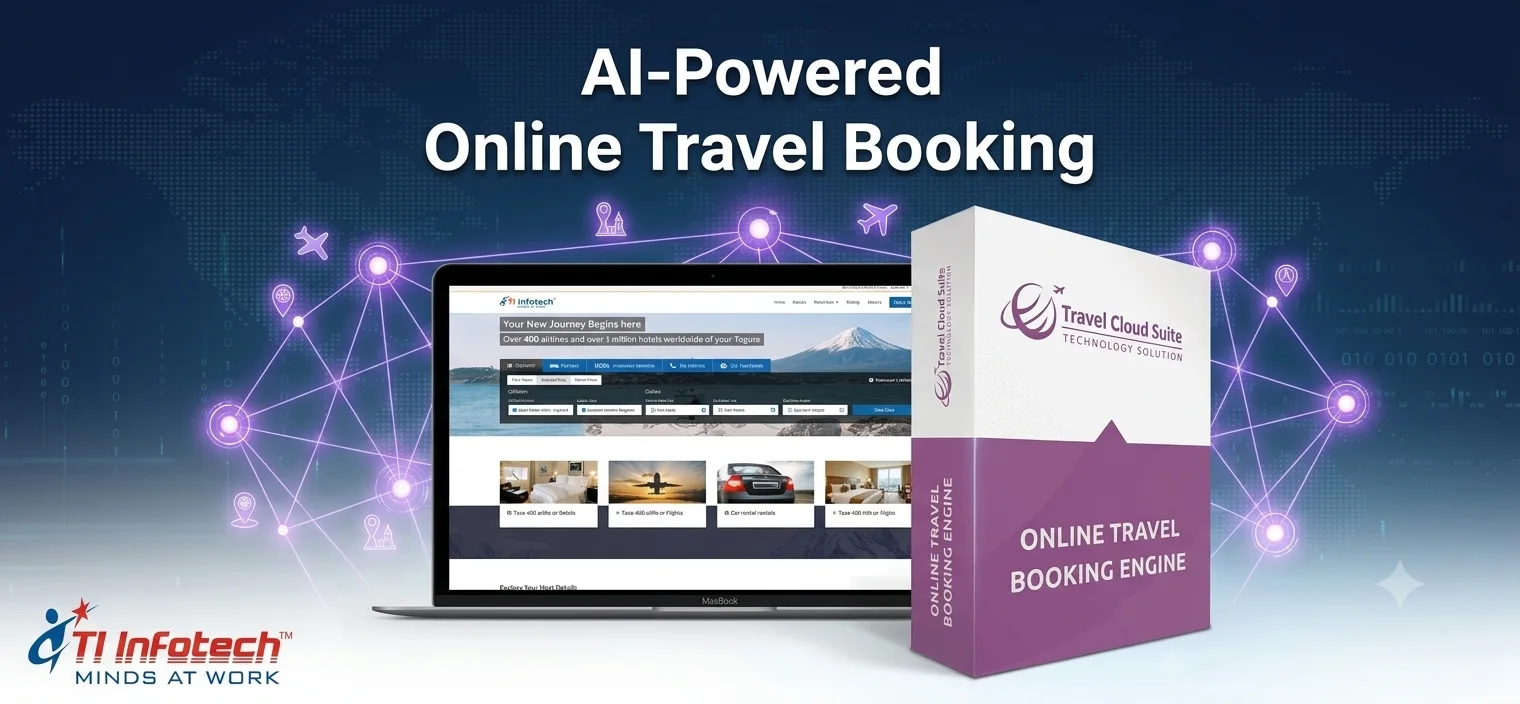
Travel Cloud Suite
Travel Cloud Suite is an online travel booking solution for OTAs and TMCs. It can work with AI-powered recommendations to help turn personalized travel plans into bookings.
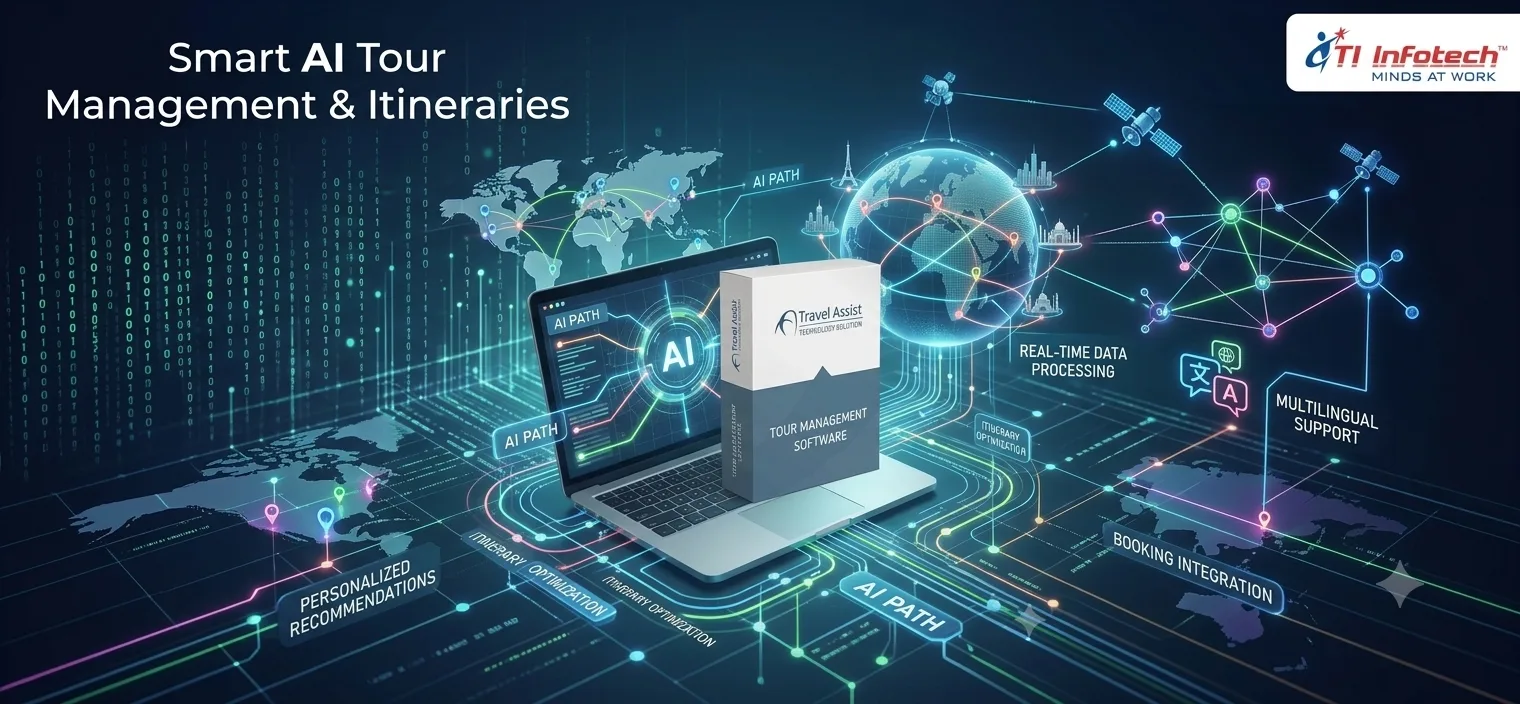
Travel Assist
Travel Assist is tour management software for tour operators and DMCs. AI can help create personalized itineraries, while Travel Assist helps manage tour operations. Travel assist has it’s own AI enabled audio based reporting solution.
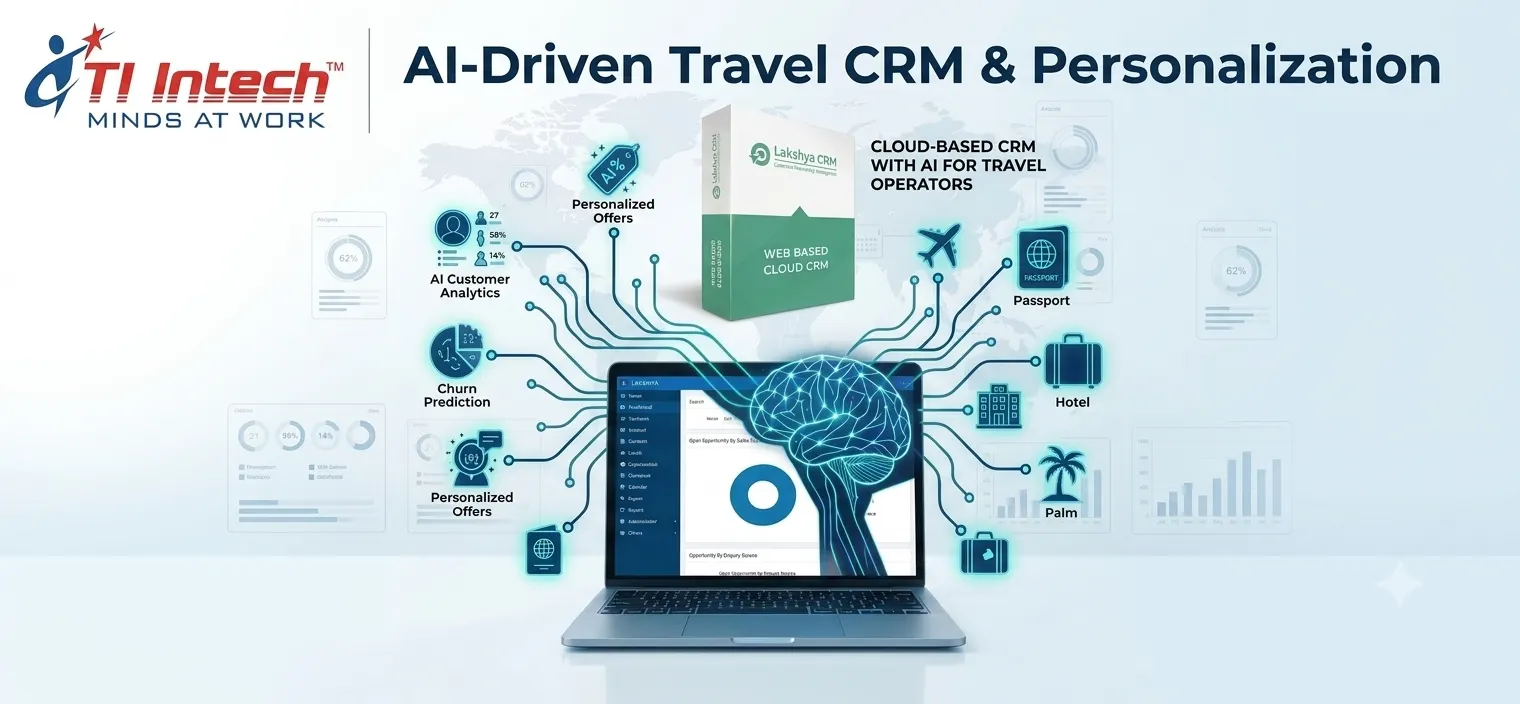
Lakshya CRM
Lakshya CRM helps manage leads, customers, and sales activities. AI can help travel teams understand customer preferences and provide more personalized communication.
VisaOps
VisaOps help automate visa-related workflows. AI can support document processing and workflow automation, helping businesses manage visa services more efficiently.
Booking Engines
TI Infotech’s Hotel Booking Engine, Flight, and Packages Booking Engines support travel bookings. AI can help recommend relevant options based on traveler preferences and make the booking journey more personalized.
Excursion and Sightseeing Solutions
Excursion Management and the Sight-Seeing Booking System help manage and book travel activities. AI can recommend experiences based on traveler interests.
CSBT and MICE Solutions
CSBT supports corporate travel booking by their own employee’s bookings using their corporate travel policies. AI can help suggest suitable travel options based on traveler and company requirements.
TI Infotech’s MICE Solutions support meetings, incentives, conferences, and events. AI can help manage travel requirements and create personalized experiences.
Act Assist
Act Assist is a cloud accounting solution that supports key financial functions. AI-powered automation can help reduce manual work and improve financial management.
Together, these solutions connect AI with customer management, booking, operations, and finance to support a more efficient travel business.
Challenges of AI in Travel
AI offers many benefits, but businesses must also consider its limitations.
Data accuracy: Flight schedules, hotel prices, availability, and opening hours can change quickly.
Real-time information: AI recommendations are more useful when connected to current travel data.
Data privacy: Travel businesses must protect customer information and follow appropriate security practices.
Human expertise: AI can provide recommendations, but travel professionals remain important for complex requirements, local knowledge, and unusual situations.
The goal should not be AI versus travel professionals, but AI working with travel professionals.
The Future of AI-Powered Travel Planning
The future may bring more AI travel assistants, conversational trip planning, hyper-personalized itineraries, real-time itinerary optimization, dynamic packaging, predictive recommendations, voice-based planning, and AI-connected booking platforms.
The goal is to make travel planning more intelligent while giving travelers and travel professionals greater control and flexibility.
Conclusion
AI in travel is transforming itinerary planning from a time-consuming research process into a more personalized and dynamic experience.
For travelers, AI can simplify destination discovery, activity planning, budgeting, and itinerary changes.
For travel agencies, tour operators, DMCs, OTAs, and TMCs, AI can speed up itinerary creation, reduce repetitive work, personalize packages, and improve customer engagement.
The real value comes when AI works with a wider travel technology ecosystem. Explore how AI can support your travel business and improve customer experience. Contact us to discuss your requirements.
The future of travel is not simply about using AI to create an itinerary. It is about connecting AI with technology that helps travel businesses plan, sell, book, manage, and deliver better travel experiences.
Frequently Asked Questions
What is AI in travel?
AI in travel means using artificial intelligence to improve travel planning, recommendations, customer service, booking, and itinerary management.
How does AI-powered itinerary planning work?
AI analyzes destination, dates, budget, interests, group size, and travel preferences to create personalized travel recommendations.
Can AI create a complete travel itinerary?
Yes. AI can create an initial itinerary covering destinations, hotels, activities, sightseeing, transportation, and daily schedules. Travelers should review recommendations before finalizing plans.
How can AI help travel agencies?
AI can help agencies create itineraries faster, personalize packages, save time, improve communication, and identify relevant travel services.
Is AI replacing travel agents?
AI does not have to replace travel professionals. It can automate routine tasks while allowing travel experts to focus on customer service, advice, and complex requirements.
What travel technology does TI Infotech offer?
TI Infotech offers a cloud-based Travel ERP software solution with integrated modules and AI-enabled capabilities that help travel agencies and tour operators automate business processes, serve customers effectively, and support business growth without the need for on-premises IT infrastructure.